In this post I am going to be sharing why decodable readers matter and how I found out the hard way! When teaching children to read it is so important to choose the right books. Children need to sound out words, build fluency, and develop reading confidence. But what’s the real difference between decodable readers and leveled readers—and why are decodable passages so effective for young learners?
My Experience With Leveled Readers
The experience that changed everything!
Before I discovered the Science of Reading and best practices for teaching dyslexic children (and all children, really), I didn’t know what my daughter should be reading.
Like many parents, I felt nostalgic when the leveled readers came home. They had colorful photos and simple sentences. My daughter proudly showed me her “reading,” and I thought she was doing wonderfully:
“I see the elephant.”
“I see the octopus.”
She read smoothly and felt accomplished—until she came across a picture she didn’t recognise. It was a seal.
When Picture Cues Don’t Help Reading Development
“I see the sh…” she began.
Like any parent, I encouraged her by focusing her on the first sound:
“Ssss.”
Her eyes darted between the picture and the word, searching for clues.
“Shhhark!” she said.
“That’s a sea lion,” I corrected, pointing to the page.

I thought my daughter was reading but I was mistaken🧐.
At the time, I thought it was a small mistake. But later, when I studied how our brains learn to read, I realised she wasn’t really reading—she was memorising sentences and guessing from pictures. When the pictures disappeared, so did her ability to read.
Decodable Passages vs Leveled Readers: What’s the Difference?

Here’s the key difference:
- Leveled readers rely on memorisation, picture cues and predictable sentence structures.
- Decodable readers let children apply phonics knowledge to real text using decodable words, sentences, and passages.
This gives young learners—especially struggling readers or children with dyslexia—the chance to experience reading success from the very start.
How Decodable Texts for Kindergarten Build Confidence and Fluency
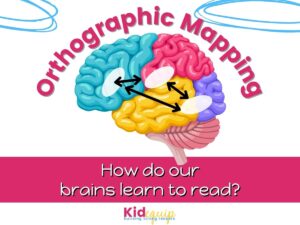
As a dyslexia specialist teacher, I’ve seen first-hand how children’s brains learn to read. Reading isn’t something we pick up naturally—it has to be taught explicitly. The Science of Reading teaches us that children build skills by connecting sounds (phonemes) to letters (graphemes), a process called orthographic mapping. You can read more about the ‘Orthographic Mapping process in my blogpost here.
This is where decodable texts for kindergarten shine. They are carefully written so children can apply the phonics patterns they’ve already learned. Instead of guessing at words or relying on memory, they are truly reading.
When I work with dyslexic students, I notice the shift immediately. Once they’re given decodable passages they can actually decode, their confidence grows, and reading suddenly feels possible—not impossible.

Benefits of Using Decodable Words, Sentences, and Passages
Here’s why decodable books for kindergarten and beyond are a game-changer:
- Decodable passages build real confidence – Children experience success when they can sound out every word on the page.
- Children develop fluency with repeated practice using specific phonics patterns and this helps words stick.
- Decodable texts support dyslexic learners – Decodable texts are essential for students who need structured, systematic instruction which is actually all learners but especially those with dyslexia.
- Using decodable readers reduces frustration – Instead of guessing from pictures, children know they have the tools to figure out words. Children will realise that they don’t need to search for clues on the page but they can actually attach sounds to symbols and read the words in the text.
In my tutoring sessions, I’ve seen students who used to shut down at reading time begin to light up when given decodable sentences and passages. The difference is remarkable.
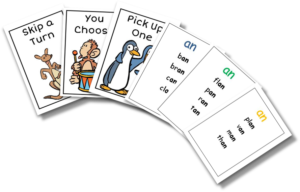
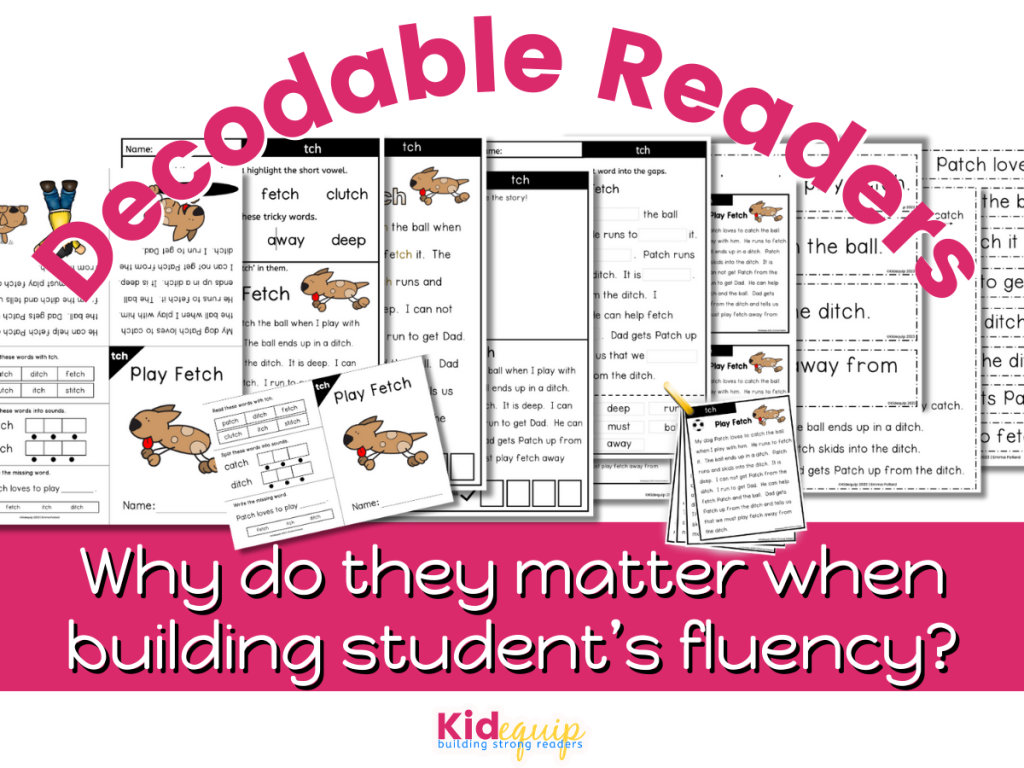
👉 If you’re a parent or teacher who wants a simple way to get started, I’ve created printable decodable reader sets that are truly “print and go.” Each set focuses on one phonics skill—like short vowels, glued sounds, the floss rule, silent e, or tricky endings like -tch, -ck, and -dge. Every passage includes a word list for warm-up, a story for decoding practice, and a dyslexia-friendly design. See the picture below for an example of the mini-books included that my students love.

How to Choose the Right Decodable Books for Your Child
Not all decodable books are created equal. When choosing, look for:
- Alignment with phonics scope and sequence – The text should only use sounds and spelling patterns your child has already learned.
- Controlled vocabulary – Too many “tricky or advanced words” can overwhelm struggling readers.
- Engaging stories – Children need to feel invested in the story and it needs to have sentences that flow and sound natural.
When I started creating my own decodable readers and passages for kindergarten, I kept these things in mind. I wanted books that were both instructionally sound and fun to read. That’s why my printable decodable sets cover different phonics stages and are designed to save you time and money. Just print and you’re ready to go—no prep needed. Each story also comes in 6 different formats so that your students can repeat read them without resorting to memorising and you can differentiate for each student.
There are opportunities to read at the word level, the sentence level and then the passage level with any irregular words noted and given attention.

Setting Children Up for Reading Success With Decodable Texts
Looking back at that moment with my daughter and the picture of the seal, I wish I had known then what I know now. She wasn’t really reading—she was memorising. But once I discovered the power of decodable readers, passages, and texts combined with the Science of Reading, everything changed.
That’s why I’m so passionate about helping other parents and teachers. Whether you’re working with a child who has dyslexia, or simply a beginner learning to read, decodable books for kindergarten and beyond set them up for real success.
Tips for Parents Using Decodable Readers at Home
Parents often ask me: How do I help my child use decodable readers at home? Here are a few of my favourite tips:
- Read aloud together – Let your child hear what fluent reading sounds like. To lighten the load, I often will agree to do one sentence each. This gives your child the opportunity to hear a fluent sentence before reading themselves.
- Review phonics first – Quickly practice the sound-spelling pattern the story focuses on. Perhaps use a highlighter and highlight the focus sound. My decodables will guide you through this.
- Celebrate small wins – Even one sentence read successfully is a victory for a struggling reader. Use those tick boxes to celebrate every practice attempt your child makes. You can use sentence strips (included in Kidequip Decodables) from the story to build confidence before reading the whole passage.
- Re-read stories – Each re-read builds fluency and confidence. Choose a different format for the same story each time you read it to engage and peak their interest. Using the cloze activities included in Kidequip Decodables is also a great activity to extend your child’s vocabulary.
And remember, you don’t have to spend hours preparing. My print-and-go decodable stories make it easy to slot in short reading sessions at home. Parents love that they can just hit “print” and have a ready-to-use story that matches exactly what their child needs.

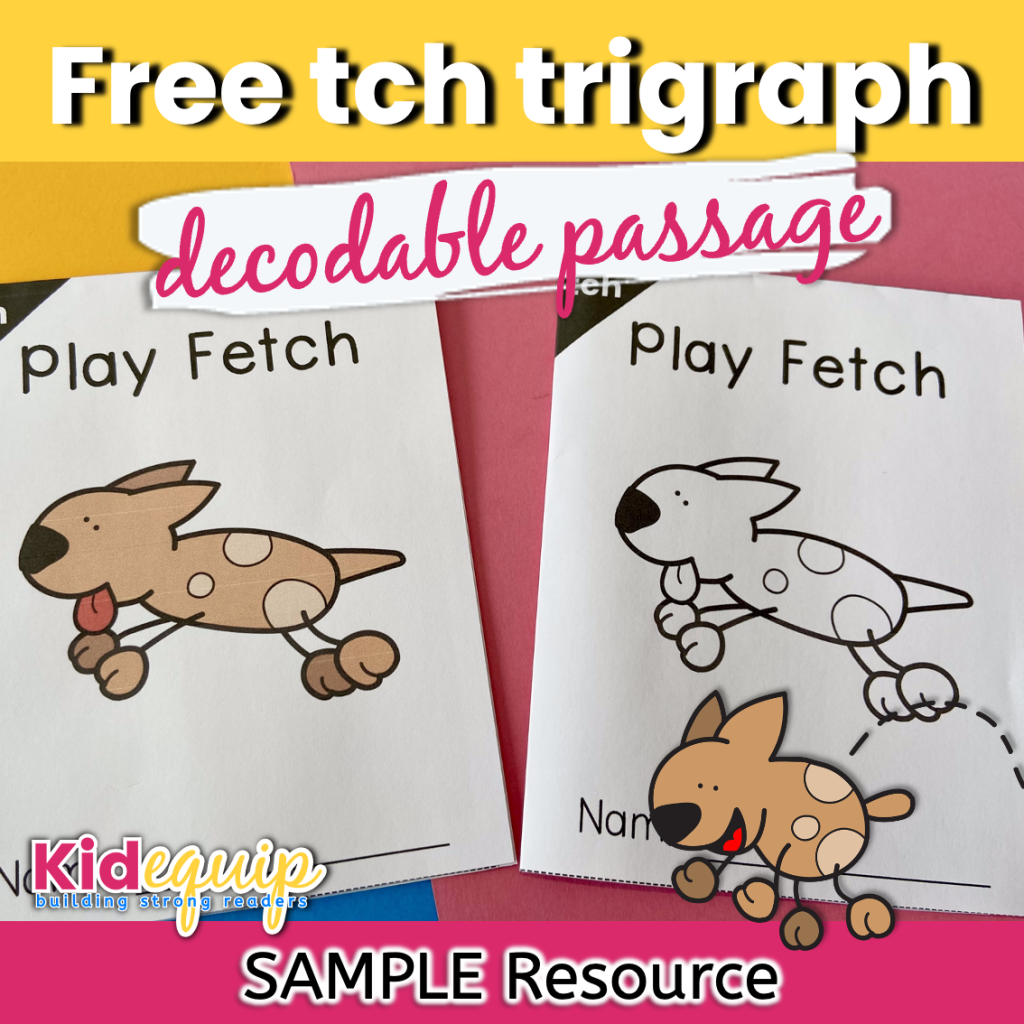
If you’d like to try them for yourself, I’ve created a few free printable decodable stories you can download. And if you’re ready for more, my full bundles cover short vowels, glued sounds, floss rule, silent e, and tricky endings like -tch, -ck, and -dge. They’ll save you hours of prep time and give your child the practice they need to grow into a confident reader.
You can grab your free sample below ⬇️
If you are a parent or teacher with a struggling reader who you think may have dyslexia but you are unsure what to do next, I have a free guide that will help you step by step. You can grab that below and if you sign up to my email list I will guide you through next steps with freebies right to your inbox. I promise not to spam you 🤗

I hope this post has helped you know all about decodable readers and their importance for teaching reading effectively. I’d love to hear your thoughts in the comments on this page or feel free to email me emma@mykidequip.com